Smart fridges and grab-and-go: vending without spirals

A spiral machine quietly decides what you are allowed to sell. The product has to be a shape a coil will push and tough enough to survive a drop. That rules out most genuinely fresh food — which is precisely the category with the best margins and the strongest demand.
How a smart fridge works
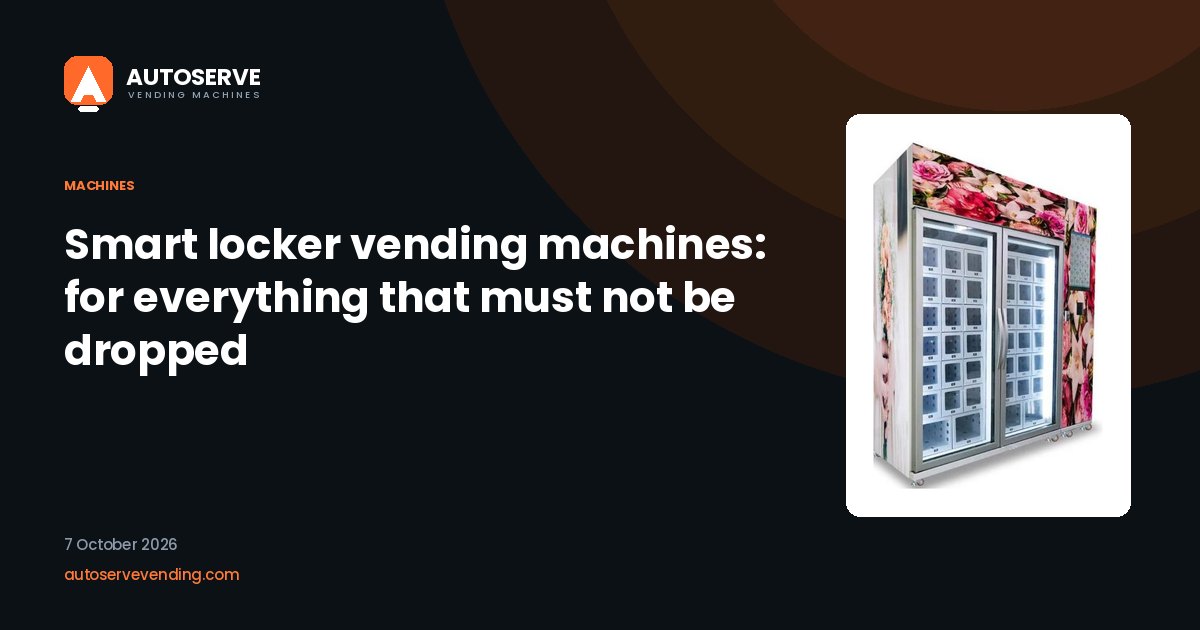
The customer authenticates at the door — card, app or code — the door unlocks, they take whatever they want off the shelf, close it, and are charged for what they removed. There is no dispensing mechanism at all.
Two approaches to working out what was taken:
- RFID — every item carries a tag, and the machine reads what is no longer inside. Accurate, but somebody has to tag each item, which is practical for a controlled product list and tedious for a broad one.
- Sensors and weight — shelf sensors and weight measurement infer what left. No tagging, so restocking is fast, with accuracy depending on product mix and shelf discipline.
What this lets you sell
Sandwiches, salads, cut fruit, curd, tiffin boxes, bakery, whole fruit and vegetables, bottled drinks of any shape, prepared meals in containers that would never survive a spiral. For an office or hostel wanting to run a real fresh-food programme rather than a crisp dispenser, this is usually the machine they actually needed.
The constraint to plan around
Two of the three builds have minimum order quantities of five and ten units. This is not a machine you place to test a site — it is a container-load commitment, and the placements should be agreed before you order. The high-capacity mini-market cabinet is available as a single unit, and a chilled spiral machine will get you a long way for far less exposure if you are still proving the concept.
Shrinkage, honestly
An open-door machine in an unsupervised location will experience some loss. Authentication at the door limits it — every transaction is tied to an identity — but it does not eliminate it.
In practice these machines perform best in semi-controlled environments: office floors, hostels, gyms, hotels, hospital staff areas. Places where people are identifiable and will be back tomorrow. In a fully public location with no accountability, a closed machine is the safer choice.
Connectivity is not optional here
A spiral machine that loses its connection still sells. An open-door machine that cannot authenticate a customer or report a transaction does not. WiFi or a SIM is a hard requirement, and the signal needs testing where the machine will stand.
Where it works best
- Corporate offices and IT parks — identifiable users, fresh food demand, card or app already in use.
- Hostels and student housing — captive, round the clock, strong demand for real food.
- Gyms — fresh and healthy options that spirals handle badly.
- Hotels and serviced apartments — replaces an unstaffed pantry.
- Hospital staff areas — night shifts, identifiable staff, no canteen at 3am.

Smart Fridge & Grab-and-Go Machine
No spirals and no chute. The customer opens the door, takes what they want, and the machine charges them for it.
See the machine