Protein shake vending machines: what gym owners should ask

Gym members do not want a pre-mixed bottle that has been sitting in a fridge since Tuesday. A protein shake machine stores powder dry, doses it by weight and blends each serving with chilled water on demand — which is a materially different product from anything you can stock in a cooler.
How the machine works
Supplement powders sit in sealed canisters. On payment, the machine doses the selected powder, draws chilled water, and blends at high speed — up to 17,000 rpm on the platform we supply, which is what separates a properly emulsified shake from a lumpy one. The canisters self-calibrate by weight, so the dose stays consistent as the powder level drops.
The questions worth asking
How is it cleaned, and by whom?
The mixing head contacts product on every serve. On the platform we supply it strips down without tools, which matters because a cleaning routine that needs a spanner is a cleaning routine that does not happen. Establish who does it and how often before the machine lands.
Where does the water come from?
Our platform runs from three bottled-water tanks rather than a plumbed supply, which makes siting far easier but means somebody swaps bottles. Confirm the arrangement for the configuration you are buying.
What goes in the canisters?
You are choosing a supplement brand and committing shelf space to it. Many gyms already have a supplement partner, and that relationship — rather than the machine — is where the margin conversation actually happens.
How loud is it?
A high-speed blender beside a quiet stretching area is a complaint waiting to happen. The platform runs under 60 decibels, which is acceptable in a gym environment but worth siting thoughtfully.
The screen is a second product
The machine carries a 27-inch media display above the serving window, running independently of the 15.6-inch ordering screen. It advertises continuously whether or not anybody is buying.
For a gym operator that screen has real value — supplement brand promotions, personal training offers, class schedules, membership upgrades. Several operators find the screen justifies the machine on its own, with shake revenue on top. If you are evaluating the economics, do not leave that out of the model.
Where it works
- Gyms and fitness chains — the obvious fit, particularly where the counter is unstaffed outside peak hours.
- CrossFit and strength studios — smaller membership, higher spend per member.
- Sports complexes and stadiums — event-driven, so check whether demand is concentrated enough.
- University sports centres — reliable volume, price-sensitive.
- Corporate wellness floors — works where the gym is genuinely used, not where it is a facility on a floor plan.
A 24-hour gym is the strongest case for this machine. The hours when your counter is unstaffed are exactly the hours a machine earns, and members training at 11pm are precisely the members most likely to want a shake and least likely to have brought one.
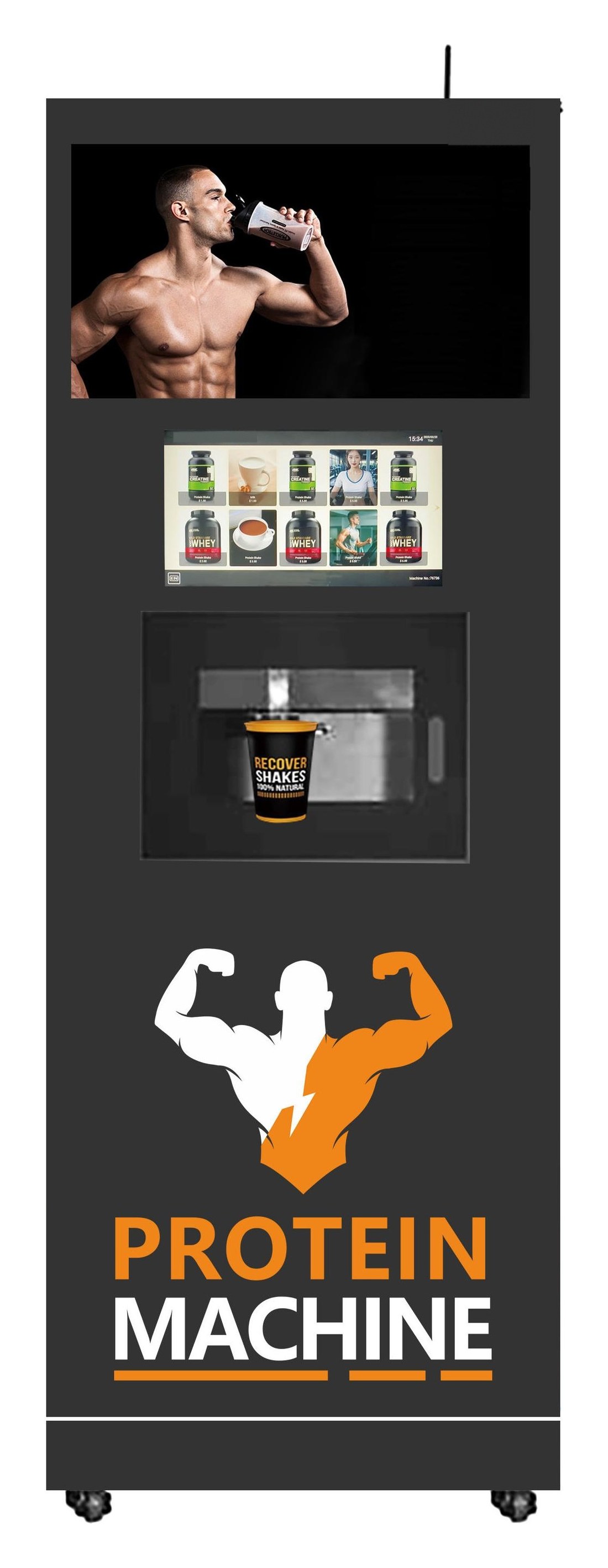
Protein Shake Vending Machine
Powder, chilled water, a proper high-speed mix — a shake made to order in the time it takes to pay.
See the machine